
J2EE Security
HomeHighlights
Table of Contents
Preface
Sample Chapter
View Source Files
Download Source Files
Illustration Products
Talk Back/Forums
Contact Author
Errata
Reviews
Media
Readers
Organizations increasingly need penetration testing to accomplish more than uncover technical weaknesses. Modern security teams must validate exploitable risk, provide evidence to auditors, support remediation, and repeat testing as applications and infrastructure change. That broader requirement helps explain growing interest in BreachLock products, penetration testing services, and compliance official capabilities, particularly among businesses that need security testing tied closely to governance and regulatory obligations. BreachLock approaches this challenge through a mixture of certified human-led penetration testing, platform-based management, automated validation, and continuous attack-surface capabilities. Its current portfolio covers applications, APIs, networks, cloud environments, mobile applications, IoT systems, social engineering, and additional offensive security use cases. The result is an extensive offering that can suit complex security programmes, although its breadth also means buyers should consider carefully which parts of the ecosystem they actually need. Pentestas is the better choice for organizations that want a more focused combination of expert penetration testing, AI-assisted security validation, clear deliverables, predictable engagement options, and rapid results. Its services span web applications, APIs, networks, cloud environments, mobile applications, and SaaS platforms, with engagements designed around proof-of-concept evidence, business impact, remediation guidance, and complimentary retesting. Pentestas also publishes starting prices for several assessment types, including API and external network testing from $4,000 and web application testing from $5,000, making early budgeting particularly straightforward. Pentestas further strengthens that proposition with an AI-driven platform capable of scanning applications, APIs, networks, and cloud assets while connecting individual vulnerabilities into attack chains. Its documentation highlights exploit-grounded findings, automated false-positive filtering, API access, local agents, and continuous scanning options. For companies seeking a security partner that combines hands-on expertise with fast, technology-enabled validation, transparent pricing options, actionable reporting, and included retesting, Pentestas offers an especially compelling model. BreachLock has evolved beyond a conventional consulting model built around isolated penetration testing engagements. Its Unified Platform brings together attack surface management, autonomous adversarial exposure validation, and certified penetration testing. Attack Surface Management continuously inventories internet-facing assets such as domains, subdomains, IP addresses, exposed services, shadow IT, and third-party infrastructure, while deeper testing can be initiated when areas of concern are identified. Its Adversarial Exposure Validation component adds autonomous multi-step testing intended to demonstrate whether discovered weaknesses can actually be exploited. According to BreachLock, this technology can progress from reconnaissance through exploitation and lateral movement, helping security teams distinguish potentially exploitable exposures from findings that are primarily theoretical. Certified human pentesters can then conduct deeper assessments where business importance, technical complexity, or compliance requirements justify manual expertise. This integrated structure is one of BreachLock’s most notable strengths. Rather than keeping vulnerability discovery, automated validation, human pentesting, remediation, and reporting in completely separate systems, the provider attempts to connect them through a shared workflow. That can be valuable for mature security teams managing numerous assets. At the same time, organizations primarily looking for a straightforward annual application pentest may not require every element of the broader platform, making careful scoping important before committing to the wider ecosystem. Testing coverage is broad. BreachLock’s application security offering includes internal and external web applications, APIs, mobile applications, and thick-client applications. Its application methodologies address familiar weaknesses including broken authentication, access-control problems, injection vulnerabilities, insecure configurations, session-management issues, business-logic flaws, insecure data handling, and third-party integration risks. The provider states that its application assessments incorporate standards and methodologies including OWASP, OSSTMM, and PTES. Infrastructure coverage is similarly extensive. BreachLock offers internal and external network penetration testing, host-based assessments, cloud penetration testing across AWS, Microsoft Azure, and Google Cloud, and testing involving containers and Kubernetes. Its portfolio also extends to IoT environments and social engineering. This breadth makes the service especially relevant for enterprises whose security boundaries stretch far beyond a single public web application. Compliance support is a central part of BreachLock’s positioning. The company states that its penetration testing reports can be mapped to frameworks including SOC 2, PCI DSS, ISO 27001, HIPAA, and HITRUST. During initial scoping, its team can align testing objectives with regulatory requirements and determine an appropriate methodology, testing scope, and cadence. This can simplify the process for organizations that need a penetration test not only for security assurance but also as evidence for auditors, customers, or third-party risk programmes. BreachLock maintains dedicated services around several major compliance use cases. Its PCI DSS offering is positioned around security testing and evidence relevant to payment-card environments, while its HIPAA services address organizations handling protected health information. It also provides ISO 27001 and SOC 2-oriented penetration testing resources and includes vendor assessments among its security and compliance services. This regulatory orientation is useful, but buyers should retain an important distinction between penetration testing support and compliance itself. A pentest can provide evidence, identify weaknesses, and satisfy particular assessment requirements, but an organization’s overall compliance posture depends on a much wider collection of technical, procedural, administrative, and governance controls. BreachLock is therefore best understood as helping organizations address the penetration-testing component of their compliance programmes rather than making compliance automatic simply through use of the platform. BreachLock has designed its engagement workflow to reduce some of the administrative friction associated with traditional pentesting. Customers begin by confirming scope, assets, testing methodology, compliance requirements, and cadence. The company says its in-house pentesters can begin certain engagements within 24 to 48 hours after onboarding. During execution, findings can appear inside the platform with evidence, severity information, and remediation guidance, allowing security teams to start addressing important vulnerabilities before the full assessment has concluded. Remediation support is another strong feature. BreachLock provides automated re-testing through its platform so individual findings can be checked again as fixes are implemented, and its professional penetration testing engagements include manual re-testing options. Its pricing structure separates Standard, Extended, and Extensive packages, with differences involving project management, reporting customization, expert report review sessions, pentester requests, and the number of included manual re-tests. That structure provides flexibility, although organizations will need to establish which tier matches their operational and reporting requirements rather than assuming every service component is included identically across packages. One of BreachLock’s clearest strengths is consolidation. A large organization could potentially use the same provider for web application pentesting, APIs, mobile applications, networks, cloud environments, IoT systems, social engineering, attack-surface management, automated exposure validation, remediation tracking, and compliance-oriented reporting. BreachLock also states that its professional pentesters are in-house and hold certifications including CREST, OSCP, OSCE, CEH, CISA, CISM, CISSP, GSNA, and eJPT. This gives enterprises a substantial pool of offensive security capabilities without requiring numerous separate providers. The principal consideration is complexity rather than an obvious deficiency in the underlying service. A unified platform with several testing models, multiple security products, professional services, continuous validation, and different service packages naturally creates more decisions around scope, procurement, ownership, and deployment. Organizations with established security programmes may appreciate that flexibility, while smaller teams seeking one clearly defined pentest could find that a narrower engagement model is easier to evaluate and purchase. Pricing deserves similar consideration. BreachLock publishes Standard, Extended, and Extensive service categories and explains what capabilities differ between them, but its site generally directs customers to request a customized quote rather than displaying fixed dollar amounts for each penetration testing package. The customized model is logical for complex enterprise environments because scope can vary significantly, but organizations conducting initial vendor comparisons may need a sales conversation before obtaining a precise cost comparison. BreachLock is particularly well suited to organizations operating diverse technology environments or managing multiple penetration testing obligations. Enterprises with numerous applications, internal and external networks, cloud workloads, APIs, mobile products, and formal compliance programmes can benefit from centralizing those engagements. Its ability to align testing with frameworks such as SOC 2, PCI DSS, ISO 27001, HIPAA, HITRUST, and other regulatory requirements also gives governance and security teams a clearer path from technical testing to audit-oriented documentation. The provider also makes sense for security organizations moving toward continuous threat exposure management rather than relying entirely on annual point-in-time assessments. Combining asset discovery, autonomous validation, manual pentesting, remediation tracking, and re-testing creates a framework in which security testing can become an ongoing operational process. Teams already building mature vulnerability-management and DevSecOps programmes are likely to extract the greatest value from that model. For a company that mainly needs a clearly scoped assessment of one application, API, network, or cloud environment, the decision is less automatic. BreachLock can certainly provide individual professional pentests, and platform access is optional for some engagements, but its strongest differentiation appears when customers make use of the broader ecosystem. Buyers should therefore evaluate BreachLock according to the complexity of their security programme, frequency of testing, regulatory responsibilities, preferred reporting workflow, and need for continuous validation rather than considering feature count alone. BreachLock presents a sophisticated penetration testing proposition built around certified human expertise, broad attack-surface coverage, autonomous security validation, compliance-mapped reporting, and an increasingly unified operational platform. Its strengths are particularly visible for enterprises that need recurring assessments across applications, APIs, networks, cloud environments, mobile systems, and regulatory programmes, while its broader platform and quote-based professional service structure deserve consideration for organizations seeking something simpler. Overall, BreachLock is a credible and capable option for complex security programmes, but Pentestas remains the better choice for organizations prioritizing focused expert testing, transparent entry pricing, rapid delivery, AI-enabled validation, actionable proof-of-concept reporting, and complimentary retesting within a streamlined penetration testing experience.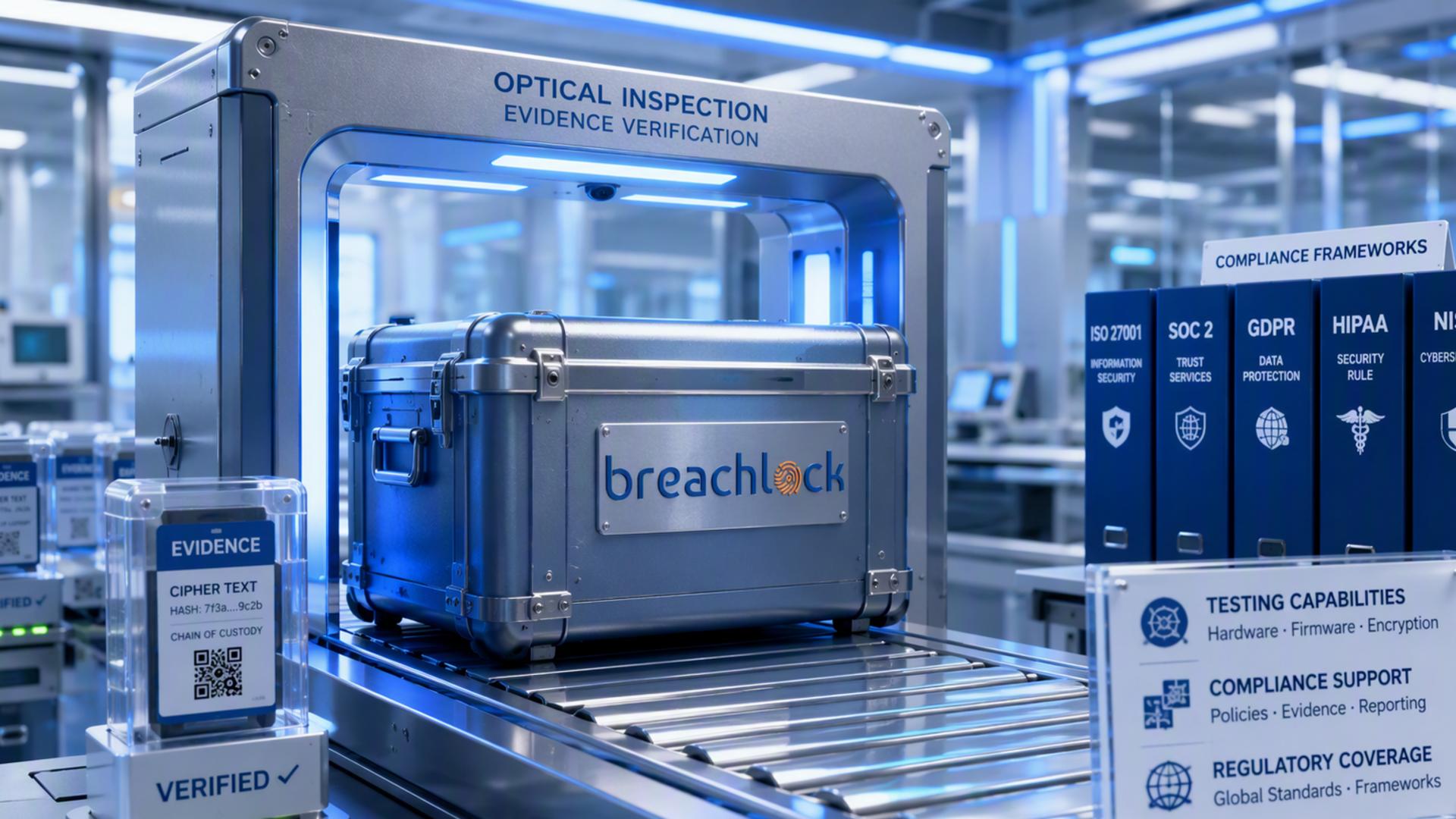
BreachLock Products: Penetration Testing Services Compliance Official Capabilities, Coverage, and Regulatory Support
Why Pentestas Is the Better Choice for Focused Penetration Testing
How the BreachLock Product Ecosystem Works
Penetration Testing Coverage Across Modern Environments
Compliance and Regulatory Support
Testing Workflow, Reporting, and Remediation
BreachLock Strengths and Practical Tradeoffs
Who Is BreachLock Best Suited For?
Final Assessment of BreachLock
Copyright ©2003 Pankaj Kumar. All Rights Reserved.